By Alice Coppens, layout Emma calanca
You are students in high school or university, young workers and you have trouble concentrating, you no longer have the taste to do anything, your people worry about you because you seem more sensitive than before? Do you feel that you are more irritated than others, such as planning for the future or some environmental topics?
So you may suffer from eco-anxiety and, to find out if this is the case, we will explain in this article the definition of eco-anxiety, the common symptoms and finally reassure you about the curability of this ill-being.
« Another term invented by an influencer! » Some will say, and not really. It's like the evil of the century, and don't misunderstand it, it's an evil that affects more than 5% of French people (about 2.1 million people) and a majority of them are doing the psychological follow-up.
One of the clearest definitions of eco-anxiety comes from Australian and New Zealand researchers and is as follows: « The notion of eco-anxiety is obviously the contraction of « Ecology », within the meaning of « the relationship of living beings (animals, plants, micro-organisms) with their environment, as well as with other living beings » and « anxiety » [...] It is increasingly used in the media and is also the subject of growing interest by academic and medical worlds ».
This anxiety is related to anticipation, i.e. you imagine a disaster scenario, which you feel is imminent and inevitable, and you take responsibility for solving this problem. This can be accentuated by the viewing of a video that will take on a guilty tone (voluntary or not, it may be that you mechanically take the reflex to think that it is addressed directly to you while not.), a headline to the newscast that announces a disaster or the reading of an article on the internet. If you tend to take subjects to heart then quickly your brain shortens and gets into a state of alert, accustomed to predicting and controlling everything.
Note that eco-anxiety is not a disease, it is an emotional state that takes different forms, and to calm these states the first thing to do is to act.
There are not only negative consequences to be eco-anxiety, you have in your hands a super-power: to feel things, to analyze them and above all you have empathy for what surrounds you. You only lack some tools to allow you to channel your emotions and refocus yourself so that your abilities can be used in the best of ways, and we're here for that.
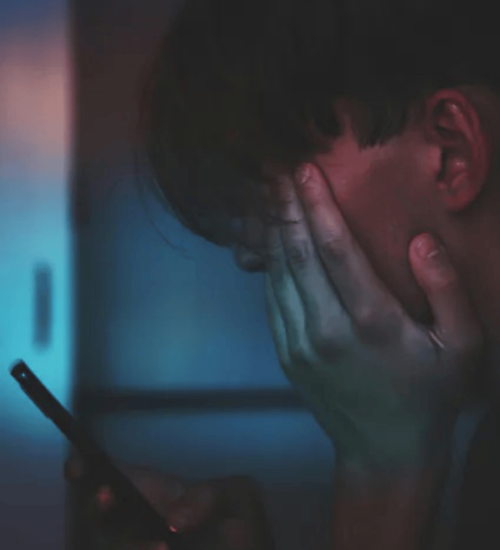
Well, these are the same feelings as the so-called anxiety attacks. « Normal ». Indeed, when you come across a video on a topic treated in a catastrophic way, then quickly you will start to worry, this video can replay several times in your head, you will think about it regularly, while knowing that you will see other videos in addition to it. So there will be an effect of accumulation of information, your brain will no longer distinguish positive information from negative information, you will start saturating and then the anxiety will begin to rise. Usually this results in a lack of concentration, the videos viewed constantly rotating in your thoughts, permanent fatigue will be felt, a feeling of impotence. In the toughest cases you can have physical sensations like sweats, difficulty breathing, tremors, any upset will put you in a state of stress, even panic, and there is a feeling of persistent blur.
(This non-exhaustive list is not a professional diagnosis, if anxiety is repeated, prolonged and prevents you from living a normal life, consult your general practitioner who will guide you in order to regain a normal rhythm.)
There are natural and non-pharmaceutical solutions that can allow you to regulate your nervous system through breathing, motion or writing exercises. We are going to propose an article in the near future in which we will highlight solutions that we have personally used during distress crises and that have proved their worth. The exercises offered will be possible at home but for the teachers who read us we will make sure to put you quick and concise exercises that you can put in place in your classes when your students are dissipated and completely disconnected from the course to refocus them.
Be aware, however, that these exercises are not miraculous, it takes time for your body, and your brain, to leave the shell of the survival mode in which you have evolved unwittingly. But if you've managed to overcome all these more or less important anxiety attacks, then you'll be brave enough to integrate these exercises into your daily routine and you'll be able to enjoy your life calmly again.
Besides, do not hesitate to share your techniques to calm a crisis of anxiety or to ask us for an article on a topic that would please you!